
2025 competition archive
2025 Music Transcription Challenge
Build the most accurate audio-to-MIDI transcription model for classical music. Open to student and research teams, hosted by Purdue AIM with the IEEE Technical Community on Multimedia Computing.
Summary
An online competition
The 2025 Automatic Music Transcription (AMT) Challenge invited participants to transcribe synthesized classical music recordings into MIDI files. Submissions were required to process 100 recordings, each up to 20 seconds long, within a maximum time limit of four hours. Instrument information was supplied in the input filenames; using it was optional. Evaluation considered instrument identification, pitch, onset, offset, and dynamics.
The challenge was sponsored by the IEEE Technical Community on Multimedia Computing (TCMC). This page preserves the published 2025 competition instructions.
Technical details
Submission process
Repository access and submission branch
Registered participants supplied their own repository URL and a fine-grained access token for the competition backend. Submissions used a branch named submission. The backend pulled new commits from that branch after the previous successful run. Teams could submit once every 24 hours.
Environment configuration
The repository required an environment.yml file at its root specifying the conda environment, dependencies, and versions.
Model execution requirements
A root-level main.py accepted -i for the input MP3 file and -o for the output MIDI file: python main.py -i input.mp3 -o output.midi. Paths referenced by main.py had to be relative to that file. Programs ran on a GPU-equipped system at Purdue's Rosen Center for Advanced Computing, with a four-hour limit for 100 recordings of up to 20 seconds each.
Input file naming convention
MP3 filenames included General MIDI instrument codes, for example 1._0_40_70.mp3. Models could use or ignore these codes. Incorrect instrument identification incurred a penalty, with smaller penalties for instruments in similar families.
Submission process
The backend pulled the submission branch, created the conda environment, and executed the model. Email notifications included run status, input and output, performance statistics, and SLURM job output.
Model weights
Git LFS was supported for storing model weights in the repository.
Schedule
Published 2025 schedule
- November 20, 2024: release of ten sample compositions from each contributing composer
- December 15, 2024: competition announcement
- December 31, 2024: additional compositions reserved for holdout evaluation
- January 31, 2025: registration opens
- February 1, 2025: sample solution release
- April 1, 2025: submission window opens
- May 1, 2025: scheduled submission deadline
- May 15, 2025: scheduled winner announcement
- June 2025: presentation of winning solutions at IEEE ICME
Awards
Cash awards
The published prizes were up to $1,500 USD for first place, up to $1,000 USD for second place, and $500 USD for third place. Award-eligible models had to outperform the MT3 sample solution. Winners had to open-source their solutions with adequate documentation for reproducibility, subject to examination by the organizers.
Final rankings used an additional holdout dataset, separate from the public leaderboard data. Winners were invited to present at IEEE ICME 2025; presentation was not mandatory. The published rules restricted cash awards to eligible countries and allowed awards to take the form of travel grants.
Sample compositions
Dataset and samples
Reference audio + MIDI pairs for participating teams to develop and validate their pipelines:
Sample Compositions Google Drive Folder ↗
See also a GM instrument numbering reference ↗ for output MIDI conventions.
Baselines
Sample solutions
The competition ships three reference baselines:
MT3: Google Research
- github.com/ojas-chaturvedi/mt3-pytorch ↗ (PyTorch port for the competition runner)
- github.com/magenta/mt3 ↗ (original Magenta implementation)
- Paper: MT3: Multi-Task Multitrack Music Transcription ↗
Basic Pitch: Spotify
- github.com/KayshavBhardwaj/basic-pitch-test-1 ↗
- Paper: A Lightweight Instrument-Agnostic Model for Polyphonic Note Transcription and Multipitch Estimation ↗
ReconVAT
Organizers
Who runs the competition

Dr. Kristen Yeon-Ji Yun
Purdue · Music
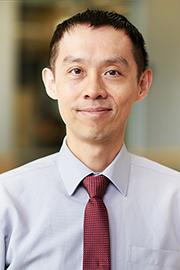
Dr. Yung-Hsiang Lu
Purdue · ECE
George K. Thiruvathukal
Loyola Chicago · CS

Tae Hong Park
Purdue · Music

Harry Bulow
Purdue · Music

Ojas "OJ" Chaturvedi
Purdue · AMT Lead
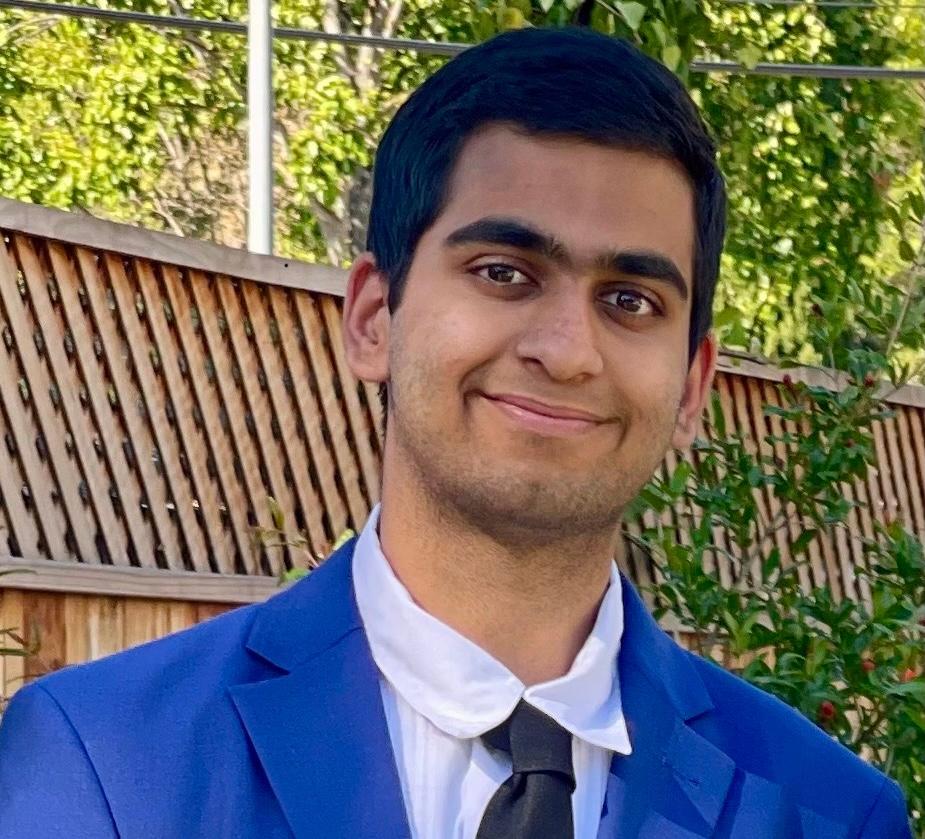
Kayshav Bhardwaj
Purdue · AMT Co-lead
Contributing composers
Music for the competition
The pieces evaluated in the competition were contributed by composers affiliated with Purdue and elsewhere:
Harry Bulow
Purdue University
Tae Hong Park
Purdue University

Allen McCullough
Purdue University

Hubert Howe
Independent composer

Ka-Wai Yu
Utah Tech University
For contributing composers
Submitting your work
The 2025 challenge used invited composers to control the complexity of the evaluation data. Composers retained copyright while granting the organizers royalty-free, non-exclusive rights for redistribution and analysis; the organizers could modify compositions to meet scoring requirements.
Invited composers were asked for 10–30 pieces, approximately 20 seconds each, across easy, medium, and difficult levels. The guidelines specified 60–90 bpm, pitches C2–C7, sixteenth notes or rests as the smallest rhythmic duration, no swing, doubly-dotted notes, trills, or mordents, meters of 3/4, 4/4, or 6/8, and dynamics from pp to ff. Each piece could use up to three distinct instruments, avoiding similar-timbre combinations such as violin and cello. Submissions included PDF scores, MusicXML, and MIDI files.
The instrument set comprised piano, violin, cello, flute, bassoon, trombone, oboe, and viola.
FAQ
Frequently asked questions
Who could participate?
Industry participation and collaborations between industry and academic teams were welcome.
Did the public leaderboard determine the winners?
No. Final rankings used separate holdout data, so the public leaderboard did not guarantee the final placing.
What training data was permitted?
Contestants could use public or proprietary training data. The organizers provided samples to demonstrate the expected input and output formats.
Was open-source release required?
Winners had to release their solutions to receive cash awards and could choose their own license. Non-winning participants were not required to open-source their solutions.
Was an ICME presentation mandatory?
No. Winners were invited to present their work, but presenting was optional.